


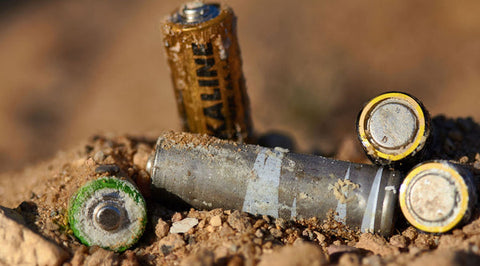
Battery generally contain heavy metal elements such as mercury, lead, cadmium, etc ., these are heavy metal elements, with great toxicity, will polluted soil. Those batteries that are very small containing heavy metals or without heavy metals are environmentally friendly.
Environmentally friendly batteries refers to a high-performance, non-polluting battery that has been put into use or developed in recent years. lithium ion battery, rechargeable battery which are being promoted, lithium or lithium-ion plastic storage batteries, which are being developed In Powland, are all environmentally friendly batteries.
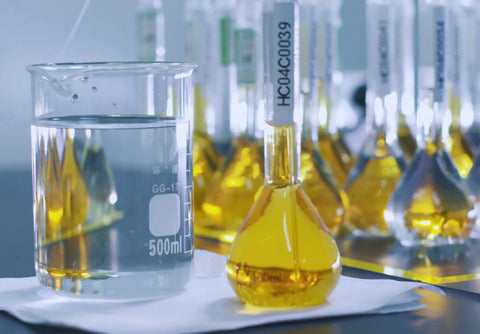
Among them, lithium iron phosphate batteries are generally considered to contain no heavy metals and rare metals, non-toxic (in line with SGS certification), non-polluting, in line with European RoHS, for absolute green environmentally friendly batteries.
Why is the lithium iron phosphate battery are environmentally friendly batteries?
Lithium iron phosphate battery, green low carbon environmental protection. Contrast other batteries, no matter the process of production, use and scrap, it does not contain any lead, mercury, cadmium and other toxic and harmful metal elements and chemicals, so there is no pollution.
Other storage batteries, fuel cells generally contain heavy metal elements, poisoned side effects, severe contamination of soil layers and water quality.
There are several security feature of lithium iron battery
For the assessment indicators of lithium-ion battery safety performance, very stringent standards were made, a qualified lithium-ion battery should meet the following conditions in safety performance:
(1) Short circuit: do not afford fire, do not explode
(2) Over-charge: do not afford fire, do not explode
(3) Hot box test: Do not afford fire, not exploding (150°C constant temperature 10min)
(4) Acupuncture: Do not explode (spiked battery with 0.3mm)
Advantage of lithium iron phosphate battery
Lithium iron phosphate batteries is widely used in new energy, in accordance with the advantages of stability, long life and no pollution.
- high temperature performance
Lithium iron phosphate battery has a wide range of operating temperatures (-20°C - 75°C), high temperature resistance, hot peaks up to 350°C to 500°C, while other lithium batteries are only about 200°C.
- large capacity
Rechargeable batteries are often working under the conditions that are fully charged but haven’t fully discharged. Such battery capacity is rapidly lower than the rated capacity value, which is called memory effect. Like nickel-hydrogen, nickel-cadmium cells have this memory effect. The lithium iron phosphate battery has no such phenomenon, and the battery can be charged no matter what state, without the need to fully discharged and then charged.
- light weight
The volume of the lithium iron phosphate battery of the same specifications is two-thirds of the lead-acid battery volume, and the weight is one-thirds of the lead-acid battery.